30 January 2011

Some Strange Stuff

Over Christmas we went for a picnic at Tygerberg. I had a camera trap at home and decided that it's a good opportunity to get it back in the field. I placed a chicken bone in front of the camera as bait, because it was on (actually in) hand.

When I checked the camera two weeks later I found that the camera filled up in the first couple of days thanks to the warm weather and strong winds without photographing much, and the chicken bone was gone... The culprit was a Four-Striped Grass Mouse.

Four-Striped Grass Mouse (Streepmuis - Rhabdomys pumilio) grabbing the bone

Checking the exit...

Making a run for it...

These images where taken with the Bushnell Trophy Cam 2010 Viewer model and demonstrates clearly the problem I have with this model. It overexposes almost every photograph it takes.

The 2009 non-viewer model is much better and has the added functionality to set it to only turn on between two specified times each day. Thanks to this functionality I'm able to place it at the pond and survive the onslaught of Guineafowl, Bontebok and warm winds during the day.

Placing the camera this time around, however, was not as easy as it usually is. I had to deal with one very grumpy Tortoise...

 Leopard Tortoise (Bergskilpad - Stigmochelys pardalis) charging for the kill

For some reason it kept on chasing me around. Every time I reach the camera this grumpy guy comes steaming up to me with murderous intent.

I tried to talk things out, but he didn't want to listen...

Once he gets to me and the camera I get up and walk back along the shore, as far as I can  go, and wait a couple of seconds for him to catch up to me (he was moving about at a good speed because he was nice and warm and was filed with an incomprehensible tortoise rage). I then head back to the camera to continue setting it up with him on me heels, charging full speed (which is luckily just a bit slower than my casual walking speed).

He even started to fight dirty...

After ruffing up my bags he then charged back to me and we repeat the process.

When I got to the pond at first I wasn't sure what he was doing until he came right up to me and launched himself at me. I managed to dodge the attack but these tortoises are rather heavy and I'm pretty sure I don't want things to get physical...

In short I manage to stay just out of reach and in time I wrapped things up and, watching my back, I headed for the hills.

10 January 2011

Some News

It's been a while since I last posted anything. There isn't much good news to report, so you'll have to endure some "bad" news instead. Me he he...

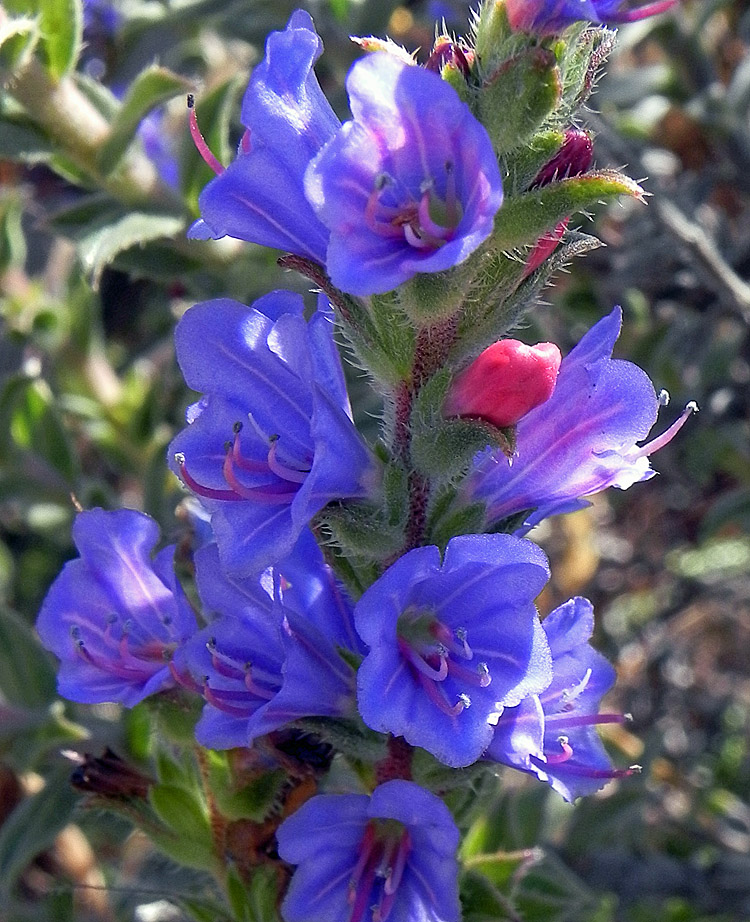
Flowers at Tygerberg
As I've said before: The western slope is giving me problems (the weather, vegetation, animals pushing over cameras, etc.). There is also quite a bit going on with regard to non-camera trapping matters: It was Christmas, we went away on holiday, I started at a new job, other hobbies, etc.

I've also "lost" my first trail camera. I've always wanted to build a homebrew trail camera. A homebrew camera is a commercial digital camera that one connects to a special circuit board, etc. to build a homemade camera trap. The biggest benefit of these homemade cameras is their image quality. There are a couple of great site on the web showing some superb images taken by other camera trappers. Getting back to the point: I ordered a starter kit from the USA a couple of months ago, but I haven't received anything yet. The best I can do is trust that the supplier did send the parcel and that it is still on it's way, but I'm starting to think that it must have gotten stolen along the way... So basically I lost a camera without ever having had it in my own hands.

More flowers from Tygerberg

Since I'm laying on the blues heavily, and I do apologise, I'll also briefly mention my disappointment with my Bushnell Trophy Cam 2010 Viewer model. It is in almost all practical aspects inferior to my 2009 non viewer model.

Again some flowers at Tygerberg (to lighten the mood)

With that off my chest I feel like mentioning some good things that are happening as well. This month I'll finished 12 months of camera trapping at Tygerberg. I don't know when I'll get around to putting a post together, but I'm looking forward to it.

I also want to start working on a Tygerberg "booklet/website" to make more of my camera trapping information available.

In between all the difficulties I still managed to get some photographs of a few mammals at the reserve.

Porcupine (Ystervark - Hystrix africaeaustralis) sniffing along

Four-Striped Grass Mouse (Streepmuis - Rhabdomys pumilio)
 
A youngster nibbling away

06 December 2010

Regulars Doing The Rounds

Things are going a bit slow on the Western slope of Tygerberg and I've been busy with other things, the result of which is fewer blog posts...

I think it might have been a while since I last posted images of two of the regulars that almost always pop up here in Cape Town.

Porcupine (Ystervark - Hystrix africaeaustralis) heading going down hill

Small Grey Mongoose (Kleingrysmuishond - Galerella pulverulenta) sneaking along

I couple of weeks ago I stumbled into this grasshopper.

Koppie Foam Grasshopper (Rooibaadjie - Dictyophorus spumans) chillin' on a twig

This grasshopper species is known to extract and store heart poisons (cardiac glycosides) from the milkweeds it eats. It can produce a yellow foam containing the poison when disturbed.

27 November 2010

Large Mongoose Brightens Up Day

I went to check on the cameras shortly after I placed them to make sure that the SD cards weren't filling up to fast. I was a bit grumpy when I found the one camera with its SD card filled, again...

When I got home I checked the 2 GB card. It was filled in just under 4 hours (again), even after my latest batch of vegetation clearing.

I always go through all my photographs/videos when I get home. It can be a long and fruitless process, but you never know. Last time there was absolutely nothing photographed, but this time I was lucky. In fact I was very lucky, I got a few great photographs of a Large Grey Mongoose.

Large Grey Mongoose (Grootgrysmuishond - Herpestes ichneumon) looking freakishly large in this photograph

The camera also managed to capture images of 3 bird species. I didn't know that I photographed a mongoose while I was busy checking the camera (Bushnell Trophy Cam without the viewer).

I was feeling hot, sweaty and somewhat frustrated, so I decided to switch the camera to only turn on at 5:00 pm and then turn itself off at 9:00 am. I'm hoping it will minimize most of the photographs of vegetation blowing in the wind. The downside is that I severely cripple my chances of photographing daytime species such as the mongoose above.

23 November 2010

Tricky Bits At Tygerberg

Camera trapping can be tricky during the best of times, but there are a few things that I really struggle with: dense vegetation and strong wind.

The western slope of Tygerberg Nature Reserve

More than half of Tygerberg is covered by very dens growing shrubs. Below is a map of Tygerberg that shows where I have camera trapped thus far (including a few general observations, mostly tortoises).

Map of Tygerberg and my camera trap spots

As you can see I'm clearly more active on the eastern slope. It's also worth mentioning that the main entrance to the reserve is on the eastern side as well.

I've been wanting to trap more on the western slope, but it can be a tough walk to get to the cameras and back. But mostly I find it very tricky to find a good spot in the dense vegetation.

An "average sample" of the western slope

One of the things I'm curious about is what animals actually move about in this sort of habitat? It is very difficult for me to move from point A to B without a path. Luckily if you look hard enough, every now and again, you might stumble across something that looks more promising for camera trapping: a small or faint trail.

Hidden amongst the shrubs there is a small path (this is one of the clearest I've found yet)

I'm trying to trap in areas that I have been avoiding up to now. I've been avoiding them because they look less promising and trickier to setup the cameras in. The path above looked good, so I placed a camera there after opening it up a bit more by cutting back a few twigs and clearing out the dead branches.

My next source of 700+ photos of moving vegetation in, I predict, 3.5 hours (sans-animal I'm sure)

Another problem is that I have only 3 camera. Two Bushnell Trophy Cams and one Cuddeback Capture. Both cameras models are great under the correct conditions that suit them best, but on the western slope both models have some limitations.

The Bushnells' detection zone is very wide. This week one of my cameras filled the SD card in the first 4 hours after I placed it thanks to the wind and the vegetation on the sides of the path, even after I thought I cleared everything that might lead to a large number of a false triggers. The worst part is that I only checked it a week later, so it was 6+ days lost. (The result of which is this blog post and you, poor readers, now have to suffer the consequences of my reckless, amateurish and irresponsible actions.)

The Cuddeback has the opposite problem. It has a very narrow detection zone and works best when positioned to look across the trail. Under the circumstances on the western slope it is difficult to find a good trail where the camera can be placed sufficiently far back to take decent pictures and still point across the trail. The Cuddeback has severe problems when monitoring an "area" such as a small pool. Even when 2 trails meet can get very tricky to place the camera for optimal coverage.

But, there is some good news also. I believe that it is thanks to these challenges and complications that most camera trappers do what they do and enjoy the good times so much more :)